
Realistic Pantry Organization Ideas That Actually Work
- The Aesthetic Side
- May 10
- 5 min read
Updated: May 12
This post may contain affiliate links, meaning I may earn a small commission at no extra cost to you. As an Amazon Associate, I earn from qualifying purchases. See our disclosure here
The problem with most Pinterest-perfect pantries is that they look beautiful for the photo, but not always for a normal grocery day. Rows of matching glass jars look lovely until you come home with a bag of chips, a bulky cereal box, extra pasta, and snacks that don’t fit neatly into anything.
A pantry should not make life harder. It should help you see what you have, find what you need, and put things away without overthinking it. For me, the best pantry organization ideas are the ones that look calm but still leave room for real groceries.
A few baskets, clear jars, labels, and simple zones can make the whole kitchen feel easier without turning your pantry into a full-time project. Here is how to create a system that is beautiful, but still realistic.
Start With the Shelves You Use Most

The easiest way to organize a pantry is to start with the shelves you reach for every day. Keep everyday items like coffee, tea, oats, rice, pasta, cooking oil, and snacks at eye level or on the easiest shelf to access.
Think of your pantry in two simple areas:
easy-reach shelves for daily items and
backup shelves for extras or refills.
Items you use less often, like extra flour or occasional spices, can go higher up or lower down. This small shift ensures the things you need most are always exactly where you expect them to be.
Decant Only What Makes Sense
I love a glass jar moment, but not everything needs to be poured into one. Flour, rice, oats, pasta, and sugar often work well in clear containers because you can see when they are running low.
However, snack bags, unopened boxes, and random grocery extras can stay as they are. The goal is not to make your pantry look like a shop display; the goal is to make it easier to use. A simple rule to follow:
decant what you use often,
basket what looks messy,
and leave the rest alone.
This balance keeps the space beautiful without making organization feel like another chore.
Create Zones Around Real Routines
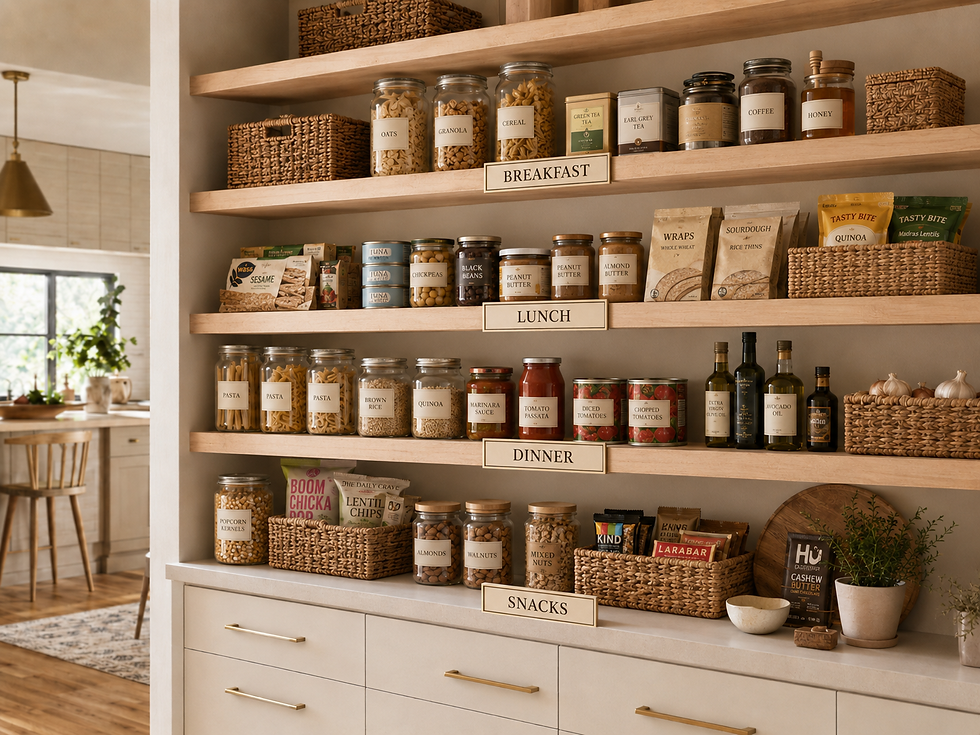
A pantry is easier to maintain when items are grouped by how you use them. Instead of only grouping by food type, create zones around your daily routines:
Breakfast Zone: Oats, cereal, honey, tea, and coffee.
Baking Zone: Flour, sugar, baking powder, cocoa, and vanilla.
Dinner Zone: Pasta, rice, sauces, grains, and canned tomatoes.
Snack Zone: Crackers, nuts, popcorn, and treats.
Grouping by routine rather than just category makes the pantry intuitive for everyone in the house because items are stored where they naturally make sense during the flow of a day.
Use Baskets for the Messy Things

Some pantry items never look neat on a shelf. Snack packets, sachets, tea bags, and half-used items create visual noise even when they are technically organized. Use woven baskets, seagrass bins, or wire baskets to group these messy items together.
For a warm minimalist look, choose natural materials and simple neutral labels. You do not need to hide everything, but grouping similar items like snacks, tea extras, and backstock immediately makes the space feel calmer.
Choose Storage That Can Move Around
Your pantry will not look the same every week. Some weeks you’ll have more snacks; other weeks you’ll have extra bulk supplies. That is why flexible storage works better than a rigid system.
Use pieces you can move around easily, like clear bins, stackable containers, and shelf risers. If you have a small pantry or only one cabinet, start with vertical space. Shelf risers and stackable bins help you use every inch without needing expensive custom shelving.
Make Deep Shelves Easier to Reach

Deep shelves are great for storage but terrible for visibility until something disappears at the back. For deep corners, use a Lazy Susan or turntable for anything you often lose.
Instead of moving five bottles to reach the one at the back, you just turn the tray. This works especially well for oils, vinegars, and small jars. For a more finished look, choose a turntable in wood, stone, or a travertine-style finish.
Remove Bulky Packaging Where You Can
You do not need to decant everything to make your pantry look better. Sometimes, simply removing the bulky outer cardboard packaging is enough. Take granola bars, tea bags, or snack pouches out of their large boxes and place them into a basket. This saves space, reduces busy packaging, and instantly makes the shelf look cleaner.
Add Simple Labels and Better Lighting

Labels help keep the pantry from slowly turning back into a mess. When baskets and jars are clearly labeled, everyone knows where things go. Keep them simple and label categories like Breakfast or Snacks rather than every single item.
Additionally, if your pantry is dark, consider adding warm LED strip lights. This improves visibility and gives the pantry a softer, more finished feel that makes the whole kitchen more enjoyable.
Pantry Organization Ideas: Shop Pantry Essentials
Airtight glass jars - Best for dry goods like flour, rice, oats, pasta, and sugar because they keep staples visible and fresh.
Woven seagrass baskets - Best for snacks, packets, and backstock because they hide mixed packaging beautifully.
Bamboo tiered risers - Best for canned goods because they make every label easier to see.
Stone or travertine Lazy Susan - Best for oils, vinegars, sauces, and small jars because it solves the lost-at-the-back problem.
Clear pull-out bins - Best for small packets because they keep loose items grouped and easy to find.
Warm motion LED strips - Best for dark pantry corners because they improve visibility and add softness.
Final Thoughts
The best pantry organization ideas are about creating a space that works on a normal day—after groceries and in the middle of a busy week. A pantry does not need to be perfect to be beautiful. It only needs to make your kitchen feel calmer, easier, and more intentional.


Comments